
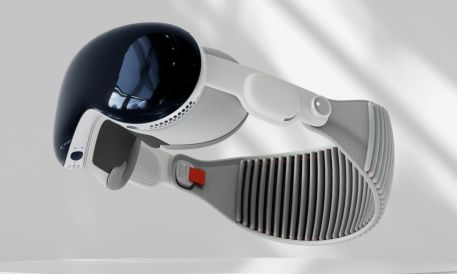
Apple has dropped its plans for a successor to its Vision Pro mixed reality headset and will focus instead on smart glasses, Seeking Alpha reported Wednesday (June 3), citing TF International Securities analyst Ming-Chi Kuo. Complete the form to unlock this article and enjoy unlimited free access to all PYMNTS content â no additional logins required. By completing this form, you agree to receive marketing communications from PYMNTS and to the sharing of your information with our sponsor,
 if applicable, in accordance with our Privacy Policy and Terms and Conditions. The company has two different versions of smart glasses on its agenda, according to the report. Apple is expected to ship display-less AI glasses in 2027. Kuo described this product as being similar to Ray-Ban Meta sunglasses, the report said. The company is expected to then ship display-equipped smart glasses in 2029. This product will incorporate both augmented reality and mixed reality, per the report. Kuo said in the report that incoming Apple CEO John Ternus signed off on the decision to drop a Vision Pro successor and that Apple is shifting its resources toward âsmart glasses with greater mass-market potential.â Apple did not immediately reply to PYMNTSâ request for comment. PYMNTS reported in February 2025 that a new generation of smart glasses had emerged and that several companies, including Meta, Amazon and Google, were betting on this product category to be the next popular connected wearable. New AI-powered smart glasses present a game-changing alternative to bulky augmented reality/virtual reality headsets, the report said. The new smart glasses are encased in traditional frames of various styles, so users donât look out of place in public, but they carry serious electronics to power AI capabilities like online searches and translations. It was reported in January that Meta and eyewear maker EssilorLuxottica were considering doubling their capacity to produce Ray-Ban Meta smart glasses from 10 million to 20 million and, if demand continues to grow, to 30 million. A week before that report, Meta said that it was pausing its planned global expansion of the smart glasses to the United Kingdom, France, Italy and Canada due to âunprecedented demand and limited inventoryâ in the United States. Meanwhile, it was reported in February that Apple was accelerating its development of AI-powered smart glasses, a pendant and AirPods. The devices will be built around the companyâs Siri digital assistant and will be linked to the iPhone, in an effort to keep users within the Apple ecosystem, according to the report. Apple to Scrap Vision Pro Successor and Focus on Smart Glasses Employees Say Claude Is the AI They Canât Work Without Morgan Stanley and Goldman Sachs Land Anthropic IPO Sam Altman Aims to Shape AI Collaborations in Washington Meetings